
God Sees You Behind These Walls

Some walls are made of concrete and steel. Some are made of fear, shame, addiction, grief, or the feeling that the world has moved on without you.
A wall can make life feel small. It can cut off familiar voices. It can make each day feel like a copy of the last one. It can make prayer feel hard, because silence starts to sound like an answer.
But silence is not the same as absence.
God sees what others miss. He sees the cot, the bunk, the sidewalk, the shelter line, the cell, the waiting room, the hard phone call, the empty pocket, the letter that never came. He sees the person beneath the label. He sees the child He made. Behind these walls, God still sees you.
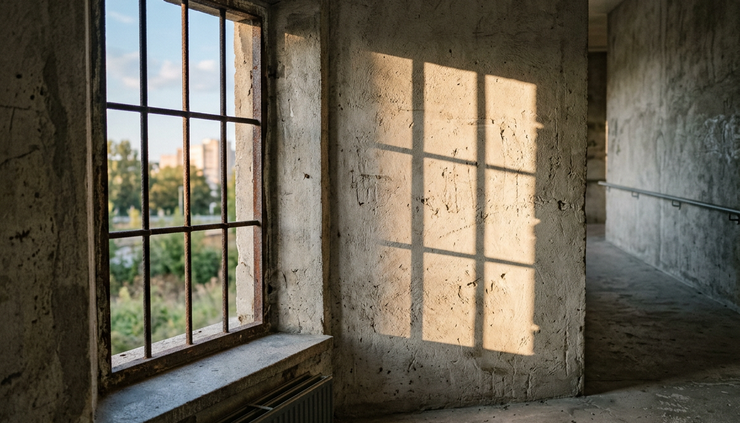
God sees more than your current place
People often judge by location. They ask where you sleep, where you have been, what charges were filed, what you lost, what you did, or what was done to you.
God looks deeper.
In the Bible, Hagar was alone in the wilderness when she learned one of the most tender truths about God. She called Him “the God who sees me” because He met her in a place where she felt forgotten. She was not in a temple. She was not surrounded by people who understood. She was in distress, and God still saw her.
That matters.
Your current place may be painful, but it is not the full story. A room can hold your body without holding your worth. A record can tell part of your past without naming your future. A shelter bed, a jail bunk, or a borrowed blanket can describe a season, but none of them can define your soul.
God does not need perfect conditions to reach a person. He has spoken in deserts, prisons, storms, caves, and lonely roads. He can speak here too.
God sees the truth, not just the worst part
Shame has a cruel voice. It says, “This is all you are.” It takes one chapter and tries to make it the whole book.
God tells the truth differently.
He does not pretend sin is harmless. He does not call pain small. He does not ignore harm, guilt, loss, or responsibility. But He also does not reduce a person to the worst day they ever lived.
Think of Joseph in prison. He had been betrayed, lied about, and locked away. From the outside, his life looked stalled. But God was still with him. Prison did not cancel God’s attention. Waiting did not mean God had forgotten.
Think of Paul and Silas singing in jail. Their bodies were confined, but their worship was not. Their song rose from a locked room, and God heard it.
Think of the thief on the cross beside Jesus. He had almost no time left and nothing to offer except a desperate, honest plea. Jesus did not turn away from him.
That is not cheap comfort. It is holy comfort. God can meet a person in the middle of consequences, questions, and pain.

God sees the prayers you cannot say out loud
Some prayers come out as full sentences. Others come out as breath.
“Help me.”
“Forgive me.”
“Don’t leave me.”
“Show me what to do next.”
There may be times when prayer feels impossible. Anger may get in the way. Depression may make words feel heavy. Fear may shut the mouth. Exhaustion may leave only silence.
God is not confused by that.
The Bible says God is near to the brokenhearted. Near does not always feel dramatic. It may feel like the strength to get through one more hour. It may come through a chaplain, a kind officer, a case worker, a stranger with a meal, a letter, a verse remembered from childhood, or a sudden urge to try again.
A simple prayer is enough to begin.
You can pray like this:
God, if You see me, help me see You. Give me strength for today. Show me the next right step. Have mercy on me, and help me receive it.
No fancy words are required. No perfect posture. No clean record. No polished speech. Just honesty.
God sees a future where you may only see walls
Hope can feel risky when life has disappointed you. It can seem safer not to expect anything good.
But hope in God is not pretending everything is fine. It is trusting that the present pain is not the only truth.
A future with God may begin quietly. It may look like:
Telling the truth instead of hiding
Asking for help when pride says not to
Reading one Psalm a day
Writing a letter of apology, if it is safe and appropriate
Choosing not to return hate for hate
Taking treatment, recovery, classes, or counseling seriously
Believing that one step still matters
Small steps count. A changed life often begins in hidden places long before anyone else sees it.
God sees those hidden places. He sees the choice not to give up. He sees the tear wiped away before anyone notices. He sees the hand raised in worship when the room feels cold. He sees the person trying to become new.

God sees you through Jesus
The clearest proof that God sees people in hard places is Jesus.
Jesus touched people others avoided. He ate with people others condemned. He noticed the sick, the poor, the grieving, the guilty, and the ignored. He told stories where the lost were searched for, the ashamed came home, and mercy had the final word.
Jesus also knew what it meant to be arrested, accused, beaten, mocked, and confined. He knows suffering from the inside. He does not look at pain from a distance.
Through Jesus, God’s mercy comes close. Forgiveness is real. New life is real. Grace is not a reward for people who already fixed themselves. Grace is God reaching into the place where change feels impossible and saying, “Come to Me.”
That invitation still stands.

Take heart behind these walls
You may feel unseen by family, by the system, by people passing by, or even by yourself. But God’s sight is not blocked by walls, uniforms, paperwork, distance, poverty, or shame.
He sees you fully, and He does not look away.
Today, let that truth be enough to take one more step. Breathe one honest prayer. Read one verse. Speak one true word. Receive one act of kindness without arguing against it. Give one act of kindness if you can.
The wall in front of you may be real, but it is not greater than God.
You are seen. You are known. You are not beyond mercy.


Comments